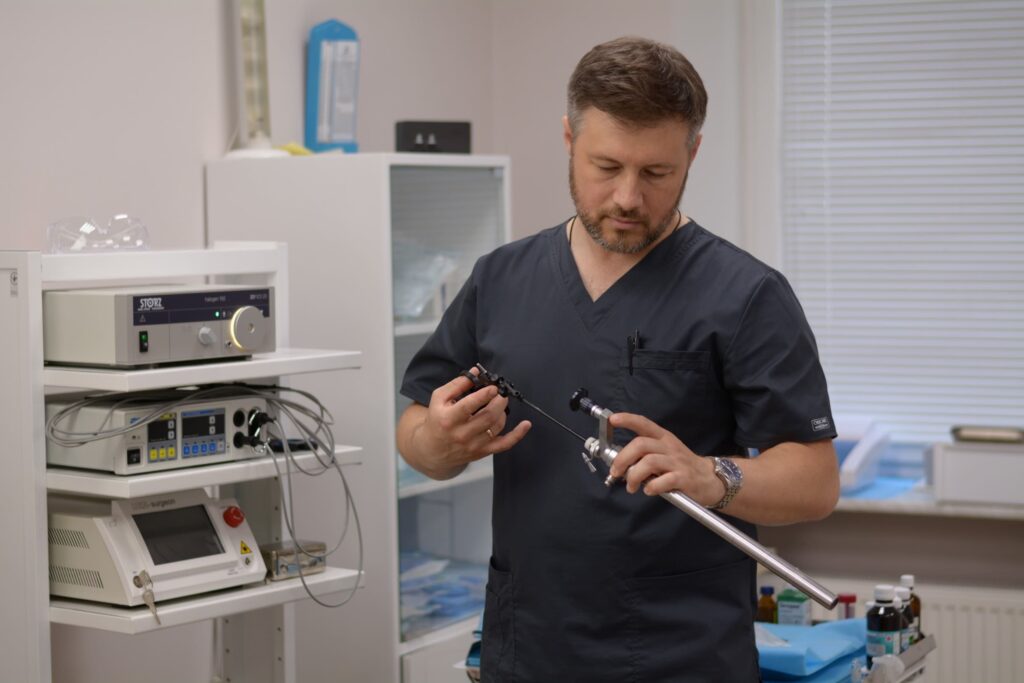
Gastroscopy
Gastroscopy is a type of endoscopic examination performed to assess the condition of the upper gastrointestinal tract—the esophagus, stomach, and duodenum. Ultra-precise digital optics make it possible to examine the mucous membrane of the digestive organs and detect even the smallest pathological changes. In addition, during the procedure, the specialist may take a biomaterial sample for laboratory testing.
Gastroscopy is indicated for:
-
Gastritis;
-
Duodenitis;
-
Esophagitis;
-
Gastric or duodenal ulcer;
-
Suspected malignant neoplasms or bleeding in the upper gastrointestinal tract.
Contraindications to a planned gastroscopy include an esophageal burn and a critical condition of the patient. After the age of 40—and especially if there is a family history of oncological diseases of the organs listed above—gastroscopy should be performed at least once a year.
Author: Mykhailo Tomyn
https://a-medical.pro
Surgeon of the highest qualification category. Proctologist. Endoscopist.